Beyond Golf with Sports Simulators
Edward Twohey on
Feb 04, 2026
Build the Centerpiece of a Luxury Home, the Simu-Lounge, Where Your Golf Swing Meets the Deep Relaxation of a Five-Star Spa
Gone are the days of simple golf nets in the basement. Today's home sports simulators have transformed the concept of in-home practice and play into an immersive, data-rich experience for the whole family. Far more versatile than just golf, these cutting-edge systems leverage advanced software, high-speed cameras, and large impact screens to create dynamic virtual environments for a variety of sports and games. They offer a high-tech, luxury vibe that extends beyond sports into recreation and entertainment.
Why Invest in a Home Sports Simulator?
Whether you're a serious athlete or a family looking for a unique entertainment hub, a sports simulator offers unparalleled benefits:
- Multi-Sport Versatility: While golf simulators are incredibly popular, the underlying technology supports much more. Train your baseball swing, practice soccer shots, or enjoy non-golf games like "Scrapyard" and "Capture the Flag" that don't require any prior sports skills.
- Performance Enhancement: Get instant, detailed feedback on your technique. High-speed cameras and launch monitors provide valuable data to help athletes improve their game in golf, baseball, softball, and soccer.
- Year-Round Entertainment: Enjoy your favorite sports regardless of the weather or time of day.
- Family Fun: Simulators offer engaging activities for all ages and skill levels, making them a fantastic addition to any family home. Even non-golfers can have a blast!
- Sophisticated Recreation: Beyond just practice, these spaces can be seamlessly integrated into a luxurious home recreation and entertainment zone, complete with lounge areas, bars, and sports viewing spaces.
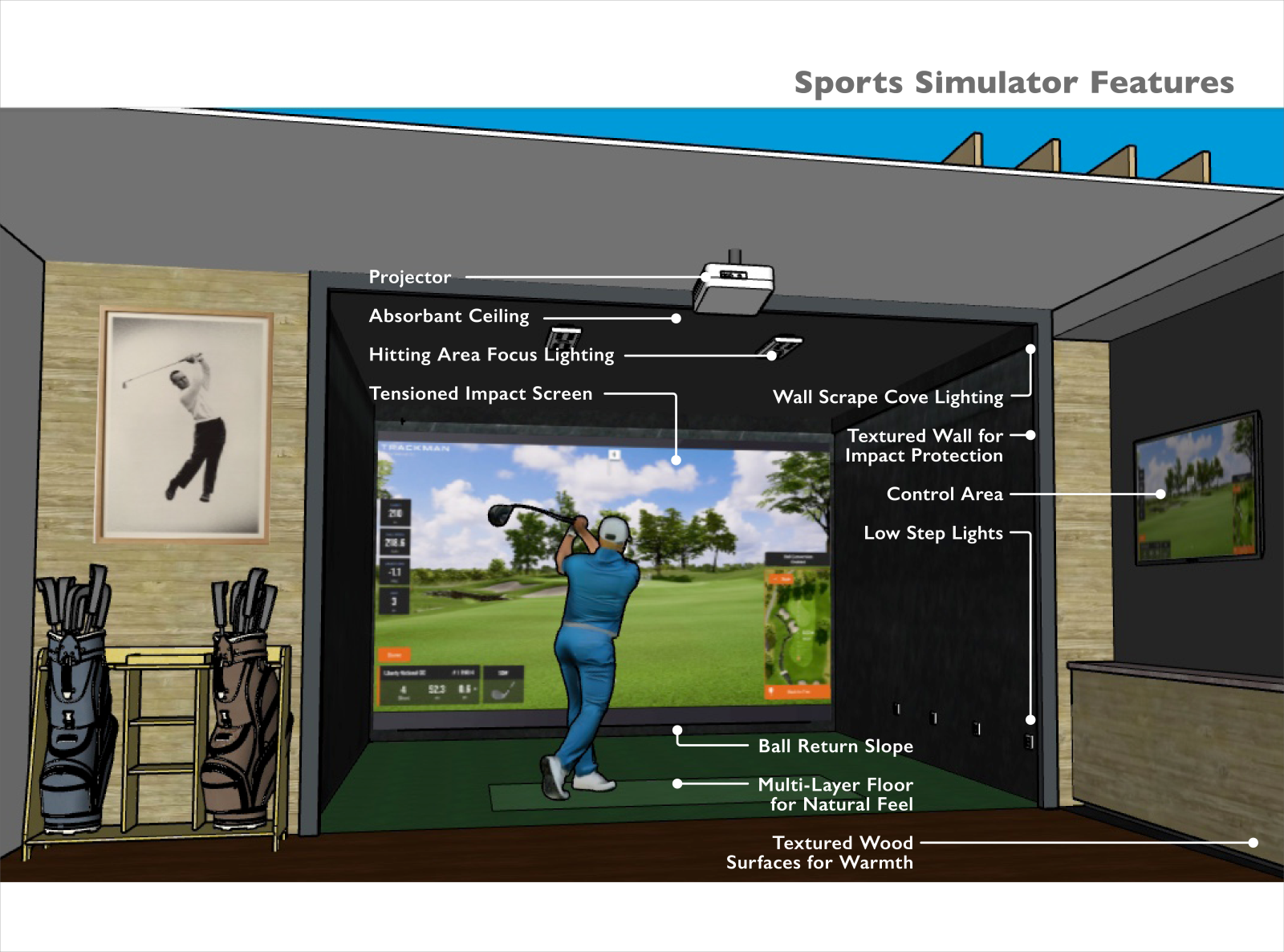
Designing Your Dream Simulator Space: The Basics
Planning is crucial for a successful and enjoyable simulator experience. These are the primary factors to consider:
Height
Generally, there are three heights at which sports simulators are often installed
- 10 feet: can accommodate some installations, but may limit equipment options and be restrictive for taller golfers.
- 11 feet: Generally considered a good standard.
- 12 feet: Ideal for optimal swing clearance and equipment flexibility.
Space
Minimum room dimensions are essential for safe and effective use
- Minimum (with limitations): Approximately 12 feet wide by 19 feet deep. This will generally only allow for either a right-handed or left-handed golfer, but not both simultaneously. 16’ will allow both right and left to share the same hitting zone.
- Behind the screen: Remember to allow 14–18 inches of clear space behind the impact screen for optimal performance and safety.
- Additional Social Spaces: Factor in additional space for any desired seating, bar, lounge, or entertainment areas.
- Sight Lines: to other features, gym spaces, spa spaces, etc…
Floor Finish
The flooring in your simulator space plays a functional role
- Depth Allowance: Plan for a couple of inches of depth for the hitting area, as this section often features a replaceable panel that may need periodic replacement due to wear.
- Surface Preference: While carpet or rugs over hardwood/tile can work, a simulated grass turf glued over a resilient rubber floor is generally preferred for its aesthetics and shock absorption.
Walls & Ceiling
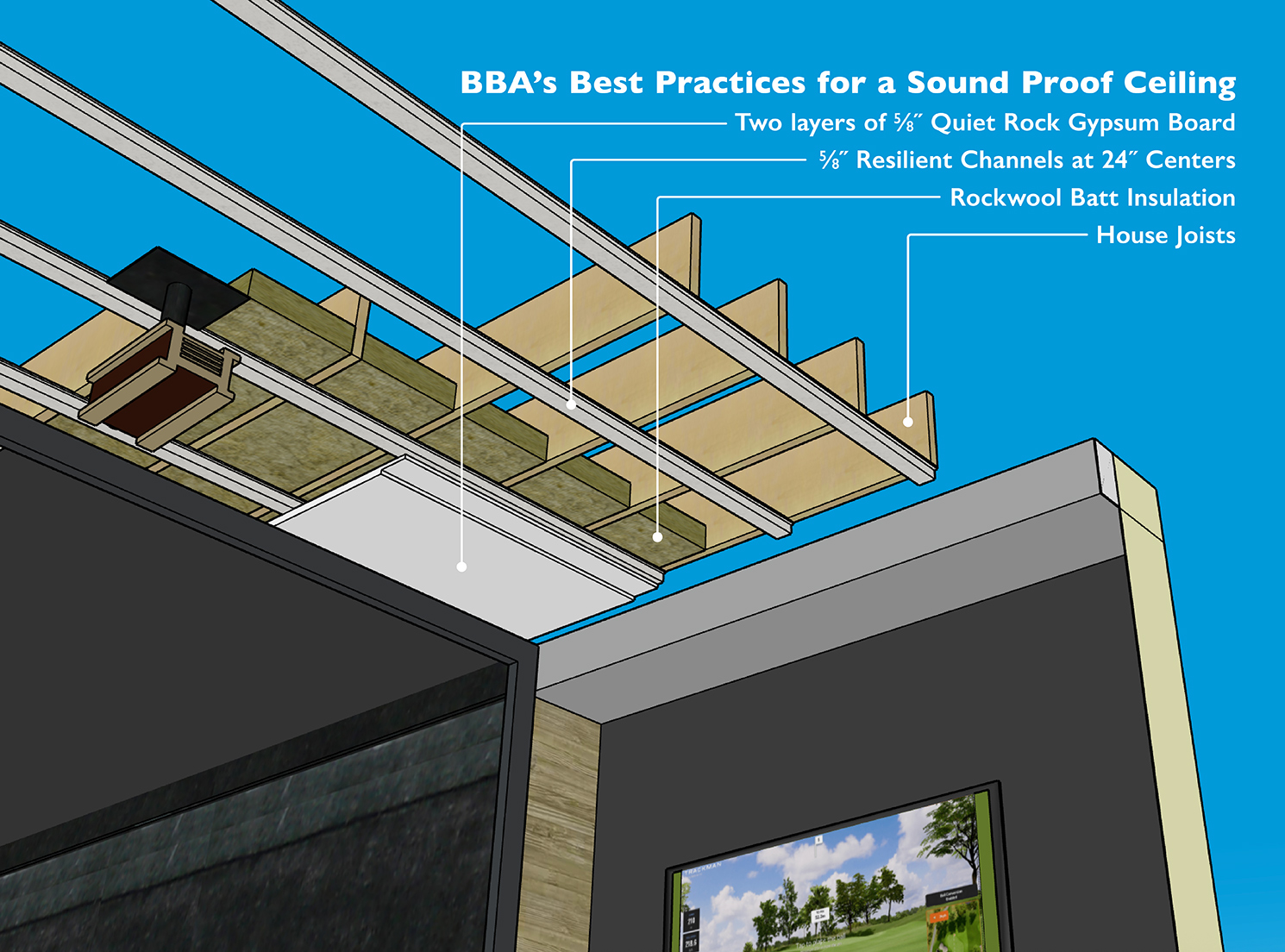
Protecting your walls and optimizing acoustics are key. Think about using materials with depth and weight, which also feel more luxurious. Fully upholstered walls have long been a high-end amenity since the days of Victorian salons. With a contemporary twist, they will give the room not only a cool luxury vibe, but a pleasing resonance and density that will create rich experiences. Acoustic separation to spaces above can be achieved at various levels, depending on the resources available. Multiple layers of drywall, hung on resilient channels, is an excellent method to isolate the sound, along with sound batts in the joist bays.
- Impact Zone: The walls within approximately four feet of the impact screen should be covered with a soft, energy-absorbing material to cushion any stray balls. Many designs incorporate a "surround" that resembles a theater proscenium.
- Acoustics: Extending soft surfaces to other walls and the ceiling helps control sound, enhancing the overall experience and preventing echoes.
Lighting
Proper lighting is crucial for both the visibility and performance of your high-speed cameras. Utilizing multiple layers of light can provide the right visibility for the activity at hand, from hitting a ball at high speed to knocking a few balls into a virtual ocean. The use of white tuning and color-changing-LED’s are the most versatile, and can create the most dramatic effects.
- Hitting Area Focus: You need bright, focused light directly over the hitting area.
- Multiple Sources: To avoid harsh shadows, we recommend multiple lights in a tight array, each focused from a slightly different angle onto the hitting zone. Commercial bays often utilize high-powered LED strip lights.
- Perimeter Lighting: Balancing the light in the room and reducing shadows can be achieved by lighting the perimeter with ceiling, wall, or floor fixtures.
Screen Area
The impact screen is the centerpiece of your visual experience.
- Mounting: The screen is typically hung from the ceiling with open space behind it and secured with velcro or laced cords.
- Ball Return: The bottom of the screen needs to be secured, often with a small sloped floor (12–18 inches deep) in front of it to aid in returning struck balls to the hitting area.
Essential Technology Components
A seamless sports simulator experience relies on a combination of high-quality technology:
- Main Screen Projector: A bright, high-resolution projector unit is paramount for a clear and immersive visual display. This is typically ceiling-mounted.
- Control Screen: A secondary screen, ideally with touch-screen capabilities, should be mounted on a side wall. This is your interface for selecting games, adjusting settings, and reviewing performance data.
- Launch Monitor: The core of the tracking system, launch monitors (like Trackman) come with specific placement requirements. Common positions include directly behind the hitter (often on a vertical surface) or ceiling-mounted just behind the hitting area. These units incorporate the high-speed cameras that capture crucial data.
- CPU: A dedicated computer is required to run the simulation software. This can be discreetly hidden in a cabinet or integrated into a remote technology rack.
- Speakers: High-quality sound significantly enhances the immersion. In-wall speakers, as part of a surround sound system, can allow your simulator room to double as a premium home theater.
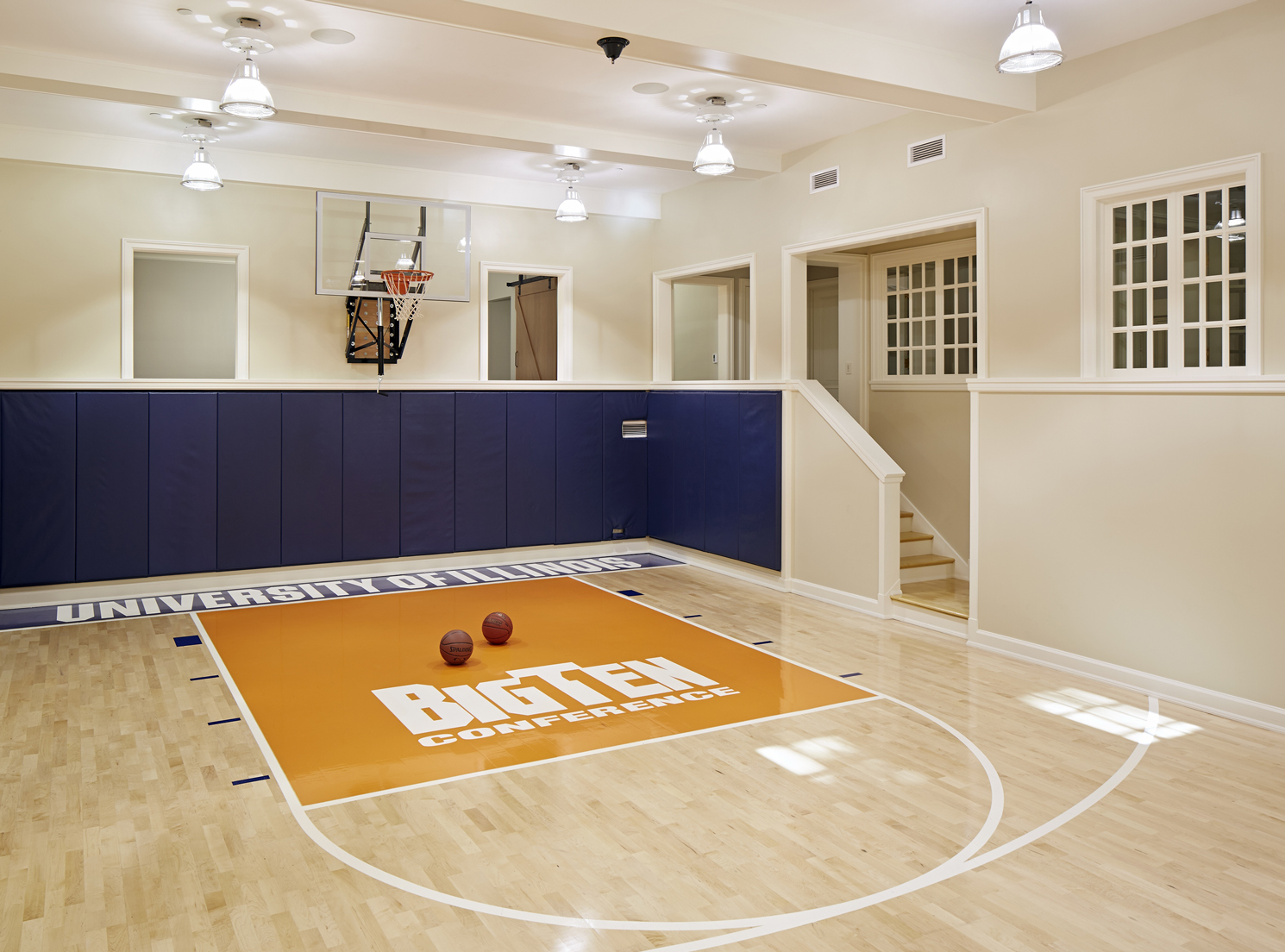
Beyond the Basics: Personalization/Transformation to Luxury & Full Sports Court Design
The design possibilities for your sports simulator space are endless. Incorporating golf-themed walls, displaying sports memorabilia, or drawing inspiration from your favorite ballparks, teams, or golf courses to create a truly unique and impressive show stopper that will delight your family and friends.
Think about how you will use the spaces and amenities; are they primarily for recreation or personal training? Entertaining? Do you also intend to view sporting events or movies? Play active sports?
Over the years, BBA Architects has designed more than just spaces for sports simulators; we have done full-on gymnasium spaces, sunken sports courts, spa rooms, saunas, steam rooms, and more. A sports simulator can be thought of as just another feature of your personal sports club, which can also include workout facilities, yoga spaces, saunas, a basketball court, and even a home theater. The sky is the limit! Dream big, and we can help make it a reality.
Full-blown sports-court projects, of which BBA Architects has designed many, often include extra-deep basement spaces that require extra structural and drainage control considerations. See our related post concerning deep basement construction, as well as these videos that discuss some of the technical considerations for these types of projects:
Urban Deep Dig #1
Shaw Basement Restructuring
Contact us today to guide you through the design journey and create the ultimate home sports simulator experience.